
Property ownership comes with a myriad of responsibilities, but few elements dictate the initial impression of your home or commercial space quite like the surfaces leading up to it. Your driveway, walkways, and driving surfaces are the welcome mats to your property. They are also feats of everyday engineering that we completely take for granted until they begin to fail. When you are looking at a crumbling surface, pooling water, or dangerous potholes, the realization sets in that finding the right professional to fix it is a high-stakes decision.
The reality of hiring someone to handle your surface installation or restoration is that it is fundamentally different from hiring a painter or a landscaper. If a room is painted the wrong color, it is a frustrating inconvenience that can be remedied with a few gallons of new paint and a weekend of your time. If a driveway or commercial surface is installed incorrectly, the consequences are financially severe and structurally detrimental. Poor drainage can funnel water directly into your home’s foundation, leading to flooded basements and catastrophic structural damage. A hastily prepared sub-base will cause the new surface to sink, crack, and degrade years before its time, turning what should be a decades-long investment into a total loss.
This comprehensive guide is designed to navigate you through the murky waters of hiring the right professional. The industry is unfortunately filled with opportunistic individuals who cut corners, use substandard materials, and employ aggressive sales tactics. However, it is also populated by highly skilled, honest tradespeople who take immense pride in their craftsmanship. The challenge lies in distinguishing the master craftsmen from the amateurs.
By the end of this guide, you will be equipped with a step-by-step, actionable methodology for vetting, interviewing, and hiring the absolute best professional for your project. You will learn how to accurately assess your own needs, see through deceptive marketing, decode complex project estimates, and ultimately secure a contract that protects you, your property, and your wallet. Let us dive into the foundational steps of ensuring your next project is completed flawlessly the very first time.
Section 1: Defining Your Scope and Setting a Realistic Budget

Before you pick up the phone or send a single email to a prospective professional, you must first become intimately familiar with your own project. Professionals appreciate an educated client who knows what they want, and having a clear understanding of your project’s scope will instantly signal to contractors that you cannot be easily taken advantage of.
Identify the Exact Problem You Are Trying to Solve
The first step is to conduct a thorough physical assessment of your current surface. Grab a notebook, a measuring tape, and perhaps take a few photos on your smartphone. You need to understand the difference between surface-level aesthetic issues and deep-rooted structural failures.
-
Assess the Damage: Are you seeing small, isolated cracks that are less than a quarter-inch wide? Are the edges of the surface still crisp and intact? If so, you might only be looking at minor aesthetic fixes. Simple blacktop repair might be entirely sufficient to extend the life of your surface for several more years without breaking the bank.
-
Look for Structural Failure: On the other hand, look out for “alligator cracking”—a series of interconnected cracks that look like the scales of a reptile. This is a primary indicator that the foundational sub-base has failed, usually due to water infiltration or bearing loads that were too heavy for the surface. In these instances, patching is a waste of money. You will need comprehensive asphalt paving services that involve completely excavating the old material, fixing the underlying drainage issues, reinforcing the sub-base, and laying a completely new surface.
-
Determine the Primary Use Case: Write down exactly how the surface will be used. A residential driveway meant to hold two family sedans requires a vastly different structural load capacity than a commercial loading dock that will endure the daily friction and weight of heavy delivery trucks. Communicating this use case immediately helps professionals determine the required thickness of the base materials and the surface layer.
Calculate a Baseline Budget for Your Space
Going into a project without a baseline budget leaves you vulnerable to wildly inflated quotes. While you cannot know the exact penny your project will cost until you receive formal estimates, you can certainly calculate a rough ballpark figure to keep your expectations grounded.
-
Understand the Pricing Model: Most surface projects are priced per square foot. Use your measuring tape to calculate the rough square footage of your project area (length multiplied by width). Research the current average cost per square foot for materials and labor in your specific geographical region, as prices fluctuate wildly based on the local cost of raw materials and fuel.
-
Account for Hidden Project Costs: The square footage price is rarely the final price. You must factor in the potential costs of excavation and haul-away fees for the old materials. If the sub-base needs to be augmented with new crushed stone, that is an additional cost. Furthermore, there may be municipal permit fees required for widening a driveway or altering the approach where your property meets the public road.
-
Establish a Contingency Fund: In any major exterior renovation, surprises happen. Once the top layer is removed, a contractor might discover soft soil, rotting tree roots, or buried debris that must be remediated before a stable base can be established. Always pad your estimated budget with a 15% to 20% contingency fund to absorb these unforeseen structural necessities without throwing your finances into disarray.
Section 2: Proven Strategies for Sourcing Reliable Professionals
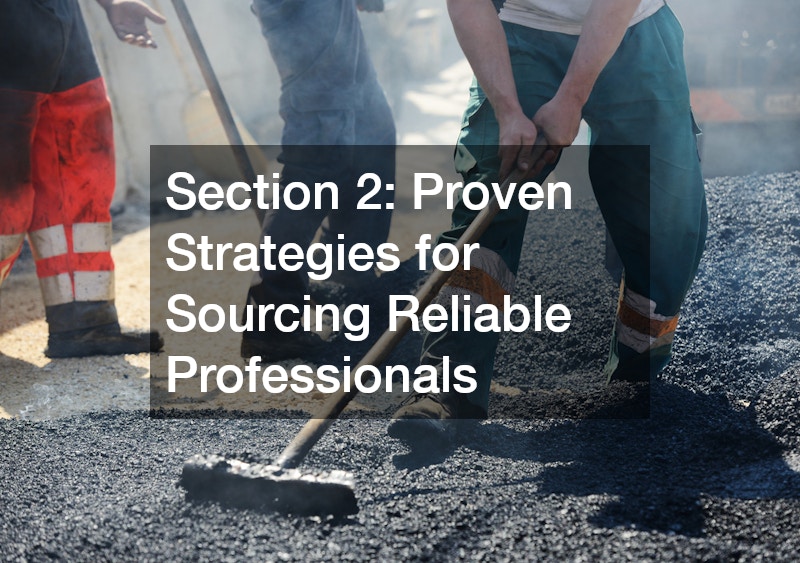
Armed with your project scope and a realistic budget, it is time to build a list of prospective professionals to interview. The goal at this stage is not to hire someone, but to cast a wide net and gather a pool of highly qualified candidates. Sourcing reliable professionals requires a blend of old-school networking and modern digital sleuthing.
Leverage Neighborhood Networks and Commercial Referrals
While the internet is a powerful tool, word-of-mouth remains the absolute gold standard in the construction and renovation industry. A professional’s true reputation is built on the physical evidence they leave behind in your community.
-
Survey Your Immediate Surroundings: Take a walk or a slow drive through your neighborhood. Look for properties with surfaces that look immaculate, level, and well-drained. If a driveway still looks structurally sound and visually appealing after enduring several harsh winters or scorching summers, that is the ultimate testament to the installer’s skill. Knock on the door and politely ask the homeowner who they hired and if they were satisfied with the communication and pricing.
-
The Geographic Advantage: Prioritize finding local paving contractors whenever possible. Professionals who are deeply rooted in your specific town or county possess invaluable localized knowledge. They understand the exact soil compositions of your area, the local freeze-thaw cycles, and the precise municipal codes and zoning laws required for your project. They also have shorter transit times for hot materials, which is crucial for a successful installation.
-
Ask Allied Tradespeople: If you recently had landscaping done, a roof replaced, or a concrete patio poured, ask those professionals for recommendations. Tradespeople talk, and high-quality contractors usually network with other high-quality contractors. A reputable landscaper will know exactly which paving companies respect property lines, clean up their job sites, and deliver excellent final results.
Filter Online Search Results for Quality Over Quantity
Once you have a few names from local referrals, it is time to turn to the internet to expand your list and begin the initial vetting process. However, navigating search engine results requires a critical eye, as the company with the biggest advertising budget is not necessarily the company with the best craftsmanship.
-
Look Beyond the Advertisements: When you type your query into a search engine, the first few results are typically paid advertisements. While reputable companies do advertise, do not blindly trust the top spot. Scroll down to the organic search results and the localized map packs. These businesses have earned their rankings through consistent local engagement and verified customer reviews.
-
Analyze the Digital Footprint: Visit the websites of the professionals on your list. A reputable business should have a professional, up-to-date website that clearly lists their physical address, a dedicated office phone number, and detailed descriptions of their services.
-
Identify Red Flags: Be incredibly wary of businesses that only use a P.O. Box or solely rely on an answering service. Another massive red flag to watch out for is the “door-to-door” scam. If someone knocks on your door claiming they have “leftover material” from a job down the street and offers you an unbelievably cheap, cash-only deal if you act right now, close the door immediately. Legitimate professionals accurately calculate their materials and do not aggressively solicit high-pressure, same-day sales.
Section 3: Vetting Credentials, Insurance, and Business History
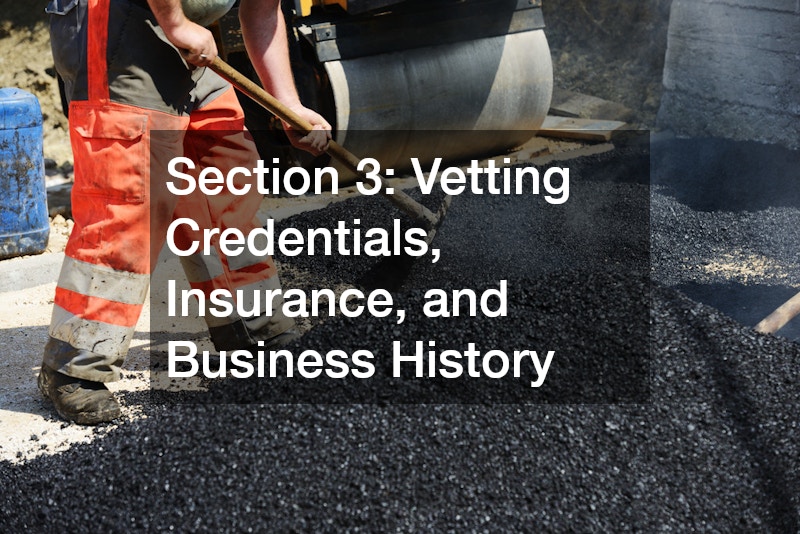
You now have a shortlist of potential candidates. The next phase is the most critical step in protecting yourself from financial ruin: the rigorous vetting of credentials. Do not let a friendly demeanor or a persuasive sales pitch distract you from verifying the cold, hard legal facts of their business operations.
Demand Proof of Adequate Liability and Workers’ Compensation Insurance
Construction is inherently dangerous work. Heavy machinery, boiling hot materials, and rigorous physical labor create a high-risk environment. If you hire an uninsured professional and an accident occurs on your property, the legal and financial liabilities could fall squarely onto your shoulders.
-
General Liability Insurance: This insurance protects you, the property owner, if the contractor damages your property during the project. For example, if a heavy delivery truck accidentally backs into your garage door, or if machinery ruptures an underground utility line, general liability insurance covers the cost of those repairs so you do not have to pay out of pocket or file a claim against your own homeowner’s insurance.
-
Workers’ Compensation Insurance: This is arguably even more important. If a crew member falls, gets burned, or is otherwise injured while working on your property, workers’ compensation covers their medical bills and lost wages. If the contractor lacks this insurance, the injured worker can legally sue you for damages.
-
How to Verify: Never simply take a contractor’s word that they are insured, and do not accept a photocopied piece of paper handed to you. Professional asphalt contractors will gladly provide you with a Certificate of Insurance (COI). This document will list the name of their insurance agency and a policy number. You must call that insurance agency directly to verify that the policy is currently active and has adequate coverage limits for the scope of your project.
Check for Active Licenses and Manufacturer Certifications
Beyond insurance, you need to ensure the business operates legally within your jurisdiction and adheres to industry-standard best practices.
-
State and Municipal Licensing: The requirements for contractor licenses vary wildly depending on your state, county, and city. Research your local government’s website to determine exactly what type of license is required for flatwork or exterior construction. When you ask a prospective contractor for their license number, look it up on the state’s licensing board database. Ensure the license is in good standing and check if there are any formal complaints or unresolved disciplinary actions on their record.
-
Manufacturer Certifications: High-quality materials, such as specific sealants or engineered sub-base aggregates, often require precise application techniques. The best asphalt companies invest heavily in their crews, sending them to training seminars to become officially certified by the manufacturers of the products they use. Ask prospective professionals if their crews hold any specific certifications, as this demonstrates a commitment to ongoing education and elite craftsmanship.
-
Investigate Business History: Unscrupulous contractors who do shoddy work often accumulate terrible reviews and lawsuits. To outrun this bad reputation, they will simply dissolve their business and open a new one under a different name a few towns over. Ask how long the company has been operating under its exact current legal name. Check the Better Business Bureau (BBB) to see their operational history. A company that has been doing business under the same name in the same community for twenty years is vastly safer than a company that sprang into existence three months ago.
Section 4: Inspecting Portfolios and Analyzing Real-World Results

Anyone can talk a good game, and anyone can hire a web designer to build a beautiful website filled with stock photos. To truly gauge the skill level of a professional, you must look past their marketing materials and analyze the physical reality of their past projects.
Look Beyond the Photos: Visit a Site in Person
A digital portfolio is a starting point, but it should never be the deciding factor. Photos can be easily manipulated with filters, and of course, any freshly laid surface looks deep, dark, and beautiful on the very first day. The true test of craftsmanship is how that surface holds up against time, weather, and the weight of vehicles.
-
Request Specific Addresses: Ask the prospective asphalt paving contractors you are interviewing to provide the addresses of three to five projects they completed in your area exactly three to five years ago. A reputable professional will be proud of their enduring work and will gladly hand over a list.
-
The In-Person Inspection Checklist: Drive to these locations and get out of your car. First, look at the edges. Are they perfectly straight and cleanly tamed at a 45-degree angle, or are they crumbling and breaking away into the grass? Second, look closely at the transitions. Where the surface meets a concrete garage floor, a sidewalk, or the street, the transition should be completely flush and seamless. A noticeable bump or lip is a sign of poor grading.
-
Analyze the Drainage: If possible, visit one of these sites shortly after a rainstorm. The most critical function of a properly engineered surface is water management. If you see standing puddles, “birdbaths,” or areas where water is pooling near the foundation of a building, the contractor failed to grade the surface correctly. Proper pitch and drainage are non-negotiable elements of a successful project.
Read Between the Lines of Customer Reviews and Testimonials
Online reviews are a vital resource, but they must be read with a critical, analytical mindset. You are looking for patterns of behavior, both good and bad, that reveal how the company operates under pressure.
-
Spotting Fake Reviews: Be wary of companies that have hundreds of glowing 5-star reviews that consist of only a few vague words like “Great job!” or “Highly recommend!” Often, these are purchased reviews. Instead, look for detailed, paragraph-long reviews where the customer mentions specific names of the crew members, describes the exact problem they had, and explains how the contractor solved it.
-
Contextualizing Negative Reviews: No company is perfect, and even the best professionals will occasionally receive a negative review. What matters is how they respond. If a customer complains about a delayed start time, does the owner respond defensively and aggressively, or do they apologize, explain that weather conditions forced a delay, and outline how they made it right? A measured, professional response to criticism is a strong indicator of good customer service.
-
Evaluate the Crew, Not Just the Boss: The owner of the company might be a wonderful, charismatic person, but they are likely not the one operating the heavy machinery on your property. Pay close attention to reviews that mention the actual workers. You want to see consistent praise for the paver operators and the manual laborers. Look for reviews that highlight the crew’s punctuality, their respect for the property (e.g., not damaging lawns or leaving trash), and how thoroughly they cleaned up the job site at the end of the day.
Section 5: Comparing Quotes, Materials, and Long-Term Warranties

If you have followed the steps up to this point, you should now be holding two to three written estimates from highly vetted, reputable professionals. This is where the final decision is made. However, you must resist the psychological urge to simply look at the final dollar amount at the bottom of the page. You are not just buying a price; you are buying a complex structural system.
Scrutinize the Specific Materials and Equipment Listed
A professional estimate in the world of asphalt contracting should read like a highly detailed recipe. It must explicitly state exactly what materials are being used, in what quantities, and how they will be applied. A quote written on a scrap of paper that simply says “prep and pave driveway – $5,000” is completely useless and should be thrown in the trash.
-
Sub-Base Specifications: The longevity of your surface is entirely dependent on the base it sits upon. The contract must specify the exact depth of the sub-base material (usually a minimum of 4 to 6 inches for residential, much deeper for commercial) and the type of material being used, such as crushed angular stone. It should also detail the compaction method, noting the size and weight of the vibratory rollers that will be used to lock the stone into place.
-
Material Layers and Thickness: The contract must clearly state the compacted thickness of the final surface layers. Ensure it specifies the thickness after compaction, not before. It should detail if a binder course (a base layer with larger aggregates for strength) will be laid down before the smoother, finer surface course. Furthermore, the contract should note the exact tonnage of material that will be delivered to your site.
-
Clear Payment Schedules: Never agree to a contract that demands 50% or more of the total cost upfront. A standard, fair payment schedule might involve a 10% to 20% deposit to secure your spot on the schedule and cover initial material mobilization, with the remainder due only upon the satisfactory completion of the work. Ensure the contract includes a clause stating that the contractor will provide lien waivers from their material suppliers to protect you from claims if the contractor fails to pay their bills.
Understand the Difference Between a Cheap Bid and a Valuable Investment
When comparing quotes, you will almost always have one bid that is significantly lower than the others. While it is tempting to save money, a drastically low bid is usually a glaring warning sign. Contractors offering rock-bottom prices are not magically more efficient; they are cutting corners. They might be skimping on the depth of the sub-base, using recycled materials of inferior quality, or rushing the job without proper compaction.
-
Analyze the Warranty: The final differentiator between quotes should be the warranty. A reputable professional will stand behind their work in writing. Review the warranty language carefully. Does it cover just the materials, or does it also cover labor? Does it guarantee against specific failures like sinking, severe cracking, or water pooling? Understand exactly how long the warranty lasts and what actions you must take to keep it valid.
-
Discuss the Future Care Plan: A true professional cares about the lifecycle of their work, not just the installation. During the final interview process, ask the contractors about their recommendations for future care. The best professionals will readily discuss a long-term strategy for parking lot maintenance or residential driveway care. They will educate you on exactly when you should apply the first layer of sealcoat (usually 12 to 36 months after installation, allowing the surface to properly cure and outgas), and how to protect the surface from fluid leaks and harsh chemical de-icers. This forward-thinking approach proves they view your project as a long-term relationship, not a quick cash grab.
Conclusion
Navigating the process of hiring a professional to repair, replace, or install a major exterior surface can initially feel overwhelming. The stakes are undeniably high, and the technical jargon can be confusing. However, by treating this process as a structured interview rather than a simple transaction, you take complete control of the outcome.
Remember that the success of your project is determined long before the first piece of heavy machinery arrives on your property. It is determined in the meticulous planning phase: when you take the time to honestly assess your structural needs, when you calculate a realistic budget fortified with a contingency fund, and when you refuse to be swayed by flashy advertisements or suspiciously low bids. The time you invest in verifying insurance certificates, looking up state licenses, and driving out to physically inspect a contractor’s past work is the greatest insurance policy you can buy.
Do not allow yourself to be rushed by aggressive salespeople. A reputable, master craftsman will respect your desire to ask difficult questions, review detailed contracts line by line, and demand transparent answers about sub-base depths and material tonnages. They will welcome your scrutiny because their business is built on transparency and enduring quality.
Take out your measuring tape today. Start writing down the specific pain points of your current surface and outline exactly what you need a professional to achieve. Begin asking your neighbors for recommendations and draft your master list of interview questions. Armed with the knowledge and strategies outlined in this guide, you are now fully prepared to cut through the noise, avoid the common pitfalls, and hire a professional who will deliver a flawless, long-lasting surface that enhances the value and safety of your property for decades to come.