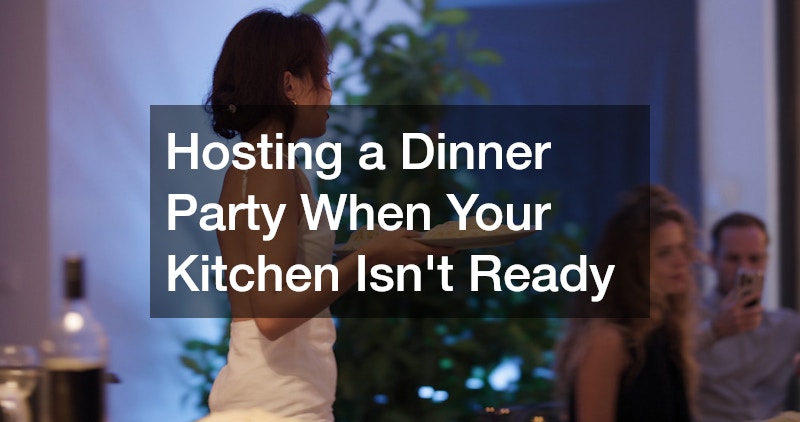
A broken oven, a mid-renovation kitchen, or a countertop covered in tools can feel like a dinner party dealbreaker, but it does not have to cancel your plans. With a little creativity, you can still gather friends and family around good food and conversation, even if your kitchen is completely out of commission. This guide walks you through practical ways to host a memorable meal without a functioning kitchen, from menu planning to seating logistics.
Plan a Menu That Requires Minimal Cooking
When your kitchen is out of order, the smartest move is to build a menu around foods that need little to no stovetop or oven time. Think charcuterie boards, cold pasta salads, pre-made dips, and assembled sandwiches that only require a knife and cutting board. Focus on dishes that can be prepped a day ahead in a slow cooker, microwave, or even a toaster oven if you have access to one.
Simplicity does not mean sacrificing flavor. A well-curated spread of cheeses, cured meats, fresh bread, and marinated vegetables can feel just as special as a multi-course meal, especially when presented thoughtfully on nice serving boards or trays.
- Choose recipes with five ingredients or fewer
- Prioritize room-temperature or cold dishes
- Use a slow cooker or electric griddle as a stand-in appliance
- Pick desserts that require no baking, like trifles or icebox cakes
- Prepare sauces and dressings the night before in a separate kitchen space
Bring in Outside Help for the Main Course

If your kitchen renovation has you truly stuck, ordering the entrée is a completely acceptable shortcut. Many caterers, grocery stores, and local restaurants offer trays of lasagna, roasted chicken, or barbecue that only need reheating in a microwave or on a portable burner. Order two to three days ahead for smaller gatherings, or up to a week out during busy seasons like the holidays, so you’re not scrambling last minute. When choosing what to order, think about how it will be served under your current constraints. A braised dish or casserole that stays warm in a slow cooker is far more forgiving than something meant to be served crispy or fresh off a grill. Ask the shop or caterer for reheating instructions, and consider whether their container can go straight into a slow cooker or warming tray to save you an extra dish to wash. It’s also worth calling ahead to ask about portion sizes and dietary options. Many caterers can accommodate vegetarian or gluten-free versions of a dish with enough notice, which saves you from having to cook a separate meal on the side. This approach frees you up to focus on hospitality rather than logistics, letting you spend your energy on setting the table and greeting guests instead of monitoring a stovetop.
Another option worth considering is researching some of the best restaurants in your area that offer takeout or catering packages designed for small gatherings. Many upscale spots now package family-style meals specifically for hosts who want restaurant-quality food without the kitchen work, complete with reheating instructions and elegant packaging that transfers nicely onto your own serving dishes. When comparing options, call ahead and ask specific questions: Do they require 24-48 hours notice? Is there a minimum order size, and does pricing work out per person or per dish? Some restaurants also offer add-ons like wine pairings, dessert platters, or disposable-but-stylish serveware, which can save you an extra errand. It’s also worth asking whether they’ll deliver or if pickup is required, since timing your meal around a restaurant’s schedule takes some coordination. Aim to have food arrive 30-45 minutes before guests do, giving you time to plate everything and stash the packaging out of sight. A little advance planning here means the food looks and tastes like it came straight from your own oven, even though it didn’t.
Set Up a Temporary Cooking Station
A dinner party does not require a full kitchen if you get creative with a temporary setup. A folding table in the dining room, garage, or even outdoors can hold a portable induction burner, an electric kettle, and a cooler for cold items. This mini station lets you handle last-minute tasks like warming bread or finishing a sauce without needing your actual kitchen.
Keep the temporary station simple and organized so it does not become a source of stress during the party. Stock it only with what you truly need, and store everything else out of sight to keep the space feeling intentional rather than chaotic.
- Use a portable induction cooktop or electric skillet
- Set up near an outlet and away from foot traffic
- Bring in a small folding table dedicated only to food prep
- Keep a trash bin and paper towels within reach
- Test all equipment a day before the event
Rethink Your Serving and Seating Arrangement
Without a full kitchen, buffet-style serving often works better than plated courses, since it reduces the back-and-forth trips guests might expect from a formal dinner. Set up a serving line on a sideboard, kitchen island stand-in, or even a dresser cleared off for the occasion. This also encourages guests to serve themselves at their own pace, which takes pressure off you as the host.
Seating can be just as flexible. Consider a lounge-style setup with lap trays and low tables if your dining room is inaccessible, or move the gathering outdoors if weather permits. The goal is to make the space feel deliberate, not like a workaround.
- Arrange food in the order it will be eaten, starting with appetizers
- Label dishes, especially if some contain allergens
- Use trays or lap boards for casual seating areas
- Keep beverages in a separate station to reduce congestion near food
Create Ambiance That Distracts From the Disruption
A little atmosphere goes a long way toward making guests forget that your kitchen is a construction zone. Dim lighting is your best friend here—swap harsh overhead bulbs for lamps, string lights, or a cluster of candles, since low light naturally draws the eye toward faces and table settings rather than exposed pipes or plastic sheeting. A curated playlist adds another layer of distraction; something with a steady, conversational volume works better than anything too upbeat or too silent, since silence tends to highlight the hum of a shop vac or the creak of tarps. Think about sightlines, too. Position the dinner table so guests are facing away from the worst of the mess, or use a folding screen, bookshelf, or even a strategically placed curtain to block the view entirely. If the dining area is close to the renovation zone, closing doors or draping a fabric panel across an open doorway can do wonders. Even small details make a difference. Fresh flowers, a tablecloth, cloth napkins, or a few mismatched candlesticks signal “this is an occasion” and visually separate the dinner party from the renovation happening just a few feet away. A scented candle or diffuser can also help mask any lingering dust or paint smell, which is often more noticeable to guests than the visual clutter itself.
Lighting does more heavy lifting than almost anything else in a room that’s mid-renovation. Swap out overhead lights for candles, string lights, or a few strategically placed lamps, and suddenly the eye has somewhere better to land than the exposed drywall or the sink full of construction dust. Dimmer, warmer light also tends to make people relax and linger at the table, which is exactly the mood you want. If the topic of your kitchen comes up, lean into it rather than apologizing repeatedly. Guests are often more interested in good company than a perfect setting, and a little humor about the situation can actually make the evening feel more memorable, in the same lighthearted way people sometimes joke about planning ahead for things as permanent as headstones, acknowledging the inevitable with a laugh rather than dwelling on it. A short, self-deprecating line works better than a drawn-out explanation of contractor delays. Something like “welcome to the construction zone, please excuse the plaster dust” said with a smile sets the tone immediately and signals that you’re not stressed about it, so they shouldn’t be either. Guests take their cues from the host, and confidence reads as charm far more often than perfection does. Small sensory details also help redirect attention: a scented candle, a playlist that matches the mood, or fresh flowers on the table can all counterbalance an unfinished backdrop. None of these fixes require a working kitchen, just a little intention about what guests will notice first when they walk in.
Hosting a dinner party during a kitchen renovation is entirely possible with the right plan, a bit of resourcefulness, and a willingness to adapt. Focus on simple menus, smart substitutions, and a welcoming atmosphere, and your guests will remember the evening for the company rather than the construction. Start by mapping out your menu and seating plan a few days ahead so you can troubleshoot any gaps before the big night arrives.