
Facing a major exterior home renovation is universally acknowledged as one of the most stressful experiences a property owner can endure. When the structural integrity of your house is on the line, the stakes are incredibly high. The barrier standing between your family, your valuable possessions, and the unforgiving elements is entirely dependent on the quality of the materials chosen and the expertise of the people installing them. Because of the sheer financial investment and the critical safety factors involved, selecting the right professional for the job is not just another household task; it is a high-stakes decision that will impact your property value and your peace of mind for decades to come.
However, the modern homeowner faces a significant problem: separating truly reliable, master-level contractors from inexperienced, fly-by-night operations is harder than ever. In today’s digital age, anyone with a laptop and a modest marketing budget can create a slick, professional-looking website. A polished logo and a handful of glowing online reviews are simply not enough to guarantee quality workmanship or financial security. Many property owners have learned the hard way that a persuasive sales pitch does not translate to competent project management or reliable customer support when things go wrong.
The purpose of this comprehensive guide is to empower you with a systematic, actionable framework for vetting potential contractors. By knowing exactly what critical questions to ask, what legal documents to demand, and what hidden red flags to look for, you can strip away the marketing jargon and make a confident, data-driven decision. Let us dive into the rigorous evaluation process that will ensure your property is entrusted only to the most capable hands.
Verify Proper Credentials and Deep-Dive Into Their Operating History

The very first step in evaluating any potential partner is to look past their marketing brochures and demand concrete proof of their legal and professional standing. The exterior renovation industry unfortunately attracts its fair share of storm chasers and unqualified laborers, making rigorous background checks an absolute necessity. You must ensure that the organization you hire is a legitimate, fully insured entity with a proven track record in your specific region.
Demand Proof of Licensing and Insurance
Never take a salesperson’s word that their organization is “fully licensed and insured.” It is imperative that you ask for physical or digital copies of their state and municipal licenses, and then independently verify those license numbers with your local contracting board. Furthermore, understanding the nuances of their insurance coverage is non-negotiable. There are two specific types of insurance you must verify:
-
General Liability Insurance: This protects your actual property. If a worker accidentally drops a heavy beam that crushes your air conditioning unit or damages your neighbor’s fence, this policy covers the financial cost of the damage. Ensure the policy limit is high enough to cover the total replacement cost of your home.
-
Workers’ Compensation: This protects you from devastating lawsuits. Roofing is inherently dangerous work. If a crew member falls from a ladder and sustains a severe injury on your property, and the contractor does not carry workers’ compensation, that injured worker can legally sue you for their medical bills and lost wages.
Before signing any agreements, ask the representative from the roofing business to have their insurance broker email you a Certificate of Insurance (COI) with your name and address listed as the certificate holder.
Investigate Their Physical Address and Longevity
A company’s operational history speaks volumes about its reliability. You should always verify that the organization has a physical, commercial address in your area—not just a P.O. Box or a residential home address. A physical showroom or commercial yard indicates a vested, long-term financial commitment to the community.
Furthermore, investigate how long the entity has been operating under its exact current name. A common tactic for disreputable roofing companies is to operate under one LLC, accumulate bad reviews, lawsuits, and workmanship claims, and then abruptly close up shop, only to reopen the next month under a slightly different name. Check with the Better Business Bureau (BBB) and your state’s Secretary of State website to verify their corporate history and ensure they have a long, uninterrupted track record of serving your community.
Check for Elite Manufacturer Designations
Top-tier material manufacturers do not want their premium products associated with shoddy workmanship, as it damages their brand reputation. Therefore, manufacturers offer elite certification tiers to contractors who meet incredibly strict financial, legal, and educational requirements.
-
Ask if the contractor holds elite status (such as a Platinum Preferred or Master Elite certification).
-
Verify that they are required to undergo ongoing, factory-sponsored training to maintain this status.
-
Understand that these certifications often allow the contractor to offer extended, enhanced warranties that uncertified competitors simply cannot legally provide.
Match the Contractor’s Expertise to Your Chosen Material and Project Scope

A common mistake property owners make is assuming that a contractor who is excellent at one type of exterior work will automatically be proficient at another. The reality is that different structural materials require drastically different skill sets, specialized tools, and specific engineering knowledge. You must match the specific scope of your project to the core competency of the crew you intend to hire.
Hire Specialists Over Generalists
General contractors are excellent for overseeing multi-faceted home additions, but for complex exterior protection systems, you need dedicated specialists. For instance, if you are planning to upgrade from standard asphalt to a highly durable steel system, you cannot simply hire a general crew. You must specifically seek out dedicated metal roofing contractors.
Installing metal panels requires precise metallurgical knowledge. The crew must know how to properly use mechanical seamers, how to account for the thermal expansion and contraction of massive metal panels, and how to utilize specialized concealed fastener clips. A generalist who usually works with asphalt will likely make critical errors when handling specialty materials, leading to severe rust issues, oil canning (wavy panels), and catastrophic leaks. Always align the contractor’s primary specialty with your material choice.
Request Case Studies for Similar Homes
Experience is highly contextual. A crew that excels at putting flat, commercial systems on wide-open warehouses might struggle with the intricate valleys, steep pitches, and dormers of a historic Victorian home. When interviewing candidates for major roof replacements, ask to see a portfolio of recent projects that closely mirror your own property’s architectural style and complexity.
-
Ask for addresses of similar homes they have completed in your town so you can drive by and inspect the visual quality of the work from the street.
-
Inquire about how they handled specific challenges on those projects, such as integrating flashing around complex masonry chimneys or custom-building crickets to divert water behind large skylights.
-
Request before-and-after photos that highlight their attention to detail on the finishing touches, such as the neatness of their ridge caps and edge metals.
Inquire About Crew Consistency
One of the most important questions you can ask during the vetting process is: “Who exactly will be climbing the ladder to work on my house?” Many large organizations operate primarily as sales and marketing engines; they sell the contract and then immediately sub-contract the actual manual labor out to the lowest-bidding independent crew available that week.
While subcontracting is not inherently evil, it severely dilutes accountability. You lose control over the vetting, training, and safety standards of the people actually working on your property. Demand to know if the company uses their own W-2 employees. Dedicated, in-house crews undergo consistent training, adhere to a unified set of company standards, and are directly accountable to the project manager. If they do use subcontractors, ask for detailed proof of how those subcontractors are vetted, insured, and managed on-site.
Scrutinize the Fine Print of Both Manufacturer and Workmanship Warranties
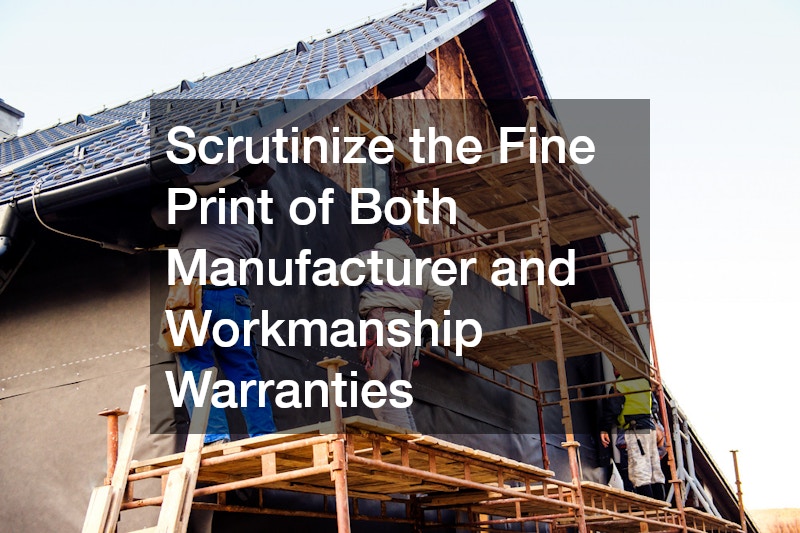
A warranty is only as good as the paper it is written on and the financial stability of the entity backing it. In the exterior construction industry, warranties are notoriously complex and filled with loopholes that can leave a property owner financially stranded in the event of a catastrophic failure. You must become a meticulous reader of the fine print and understand the dual nature of the protections being offered.
Separate the Material Defect from the Labor
It is vital to understand that your project will ideally be covered by two completely distinct warranties, and you must evaluate them separately.
-
The Manufacturer’s Warranty: This guarantee is issued by the massive corporation that produced the shingles, panels, or underlayment. It covers purely factory defects. If a shingle prematurely blisters or loses its protective granules within the first few years due to a manufacturing error, this warranty covers the cost of the defective material.
-
The Workmanship Guarantee: This is provided by the local contractor. It covers human error during the installation process. If a worker fails to properly seal the flashing around your chimney and it leaks six months later, the manufacturer will rightfully deny the claim, and you will have to rely on the contractor’s workmanship guarantee to cover the repairs and interior water damage.
Ensure Strict Compliance with Guidelines
You must confirm that the contractor’s standard operating procedures align perfectly with the manufacturer’s rigorous installation guidelines. Manufacturers actively look for reasons to void warranties to save money. If roofing installations are not performed exactly to factory specifications, your comprehensive material warranty is instantly nullified.
Common installation errors that void manufacturer warranties include:
-
Using three nails per shingle instead of the mandated four or six for high-wind areas.
-
Mixing and matching different brands of underlayment, starter strips, and ridge caps to save on costs, rather than using a single manufacturer’s cohesive system.
-
Failing to install adequate attic ventilation, which causes the materials to literally bake from the inside out due to trapped, superheated air.
Ask your prospective contractor how they ensure strict, documented compliance with factory guidelines to protect your long-term warranty status.
Evaluate the Length and Transferability of the Guarantee
When reviewing the workmanship guarantee offered by the local roof installations crew, look for a minimum coverage period of five to ten years. A one-year or two-year labor warranty is simply insufficient, as many slow-moving leaks caused by poor workmanship take several seasons of freeze-and-thaw cycles to manifest inside the home.
Additionally, you must ask if both the manufacturer’s warranty and the workmanship guarantee are fully transferable to a new homeowner. Life is unpredictable, and you may need to sell your property before the warranty expires. A fully transferable, premium warranty is a massive selling point that adds tangible resale value to your home, reassuring potential buyers that they will not face immediate capital expenditures upon moving in.
Look Beyond Star Ratings to Analyze Real Customer Experiences

In an era where online reputation can be artificially inflated, you cannot afford to take a five-star aggregate rating at face value. Evaluating a contractor’s true reputation requires a critical, investigative approach to reading customer feedback and taking the time to speak directly with their previous clients.
Identify Patterns in Online Feedback
When you look at a contractor’s profile on Google, Yelp, or specialized home service directories, ignore the overall star rating and immediately dive into the actual written text. Perfect five-star reviews are often left immediately after the job is completed—when the property looks pristine and before any potential leaks have had time to reveal themselves. Furthermore, some companies offer discounts or gift cards in exchange for immediate positive reviews.
Instead, you should specifically seek out the three-star and two-star reviews. These mid-tier reviews are often the most honest and revealing. They strip away the hyperbole and highlight the actual operational friction points of the company.
-
Look for recurring patterns: Are multiple people complaining that the crew left thousands of nails in their driveway?
-
Is there a consistent trend of the office staff failing to return phone calls once the contract is signed?
-
Do reviewers mention that the final invoice was surprisingly higher than the initial quote?
A single bad review is statistically normal; a pattern of the exact same complaint across multiple years is a glaring red flag.
Call Recent and Older References
A reputable contractor should be eager to hand you a list of references. However, do not just accept the list—actually pick up the phone and call them. When speaking to the references provided by local roofers, ask probing, specific questions that go beyond “Did they do a good job?”
Here is a brief script of critical questions to ask previous clients:
-
“How did the crew handle unexpected weather delays or hidden wood rot once the old deck was exposed?”
-
“Did the project manager communicate with you daily about the schedule and any necessary changes?”
-
“Was the final cleanup exhaustive, or did you find yourself picking up dangerous debris and sharp metal for weeks after they left?”
If possible, ask the contractor for references from projects completed three to five years ago. Speaking to someone whose system has survived multiple harsh winters and heavy storm seasons will give you a much more accurate picture of the long-term durability of the crew’s workmanship.
Check Responsiveness After the Sale
A company’s true character is revealed not when they are trying to secure your money, but when a problem arises after they have already been paid. You must investigate their post-installation customer service.
Look specifically for reviews or ask references about how the company handles warranty calls. If a minor leak occurs a year down the line, do they dispatch a technician for roofing repairs within 24 hours, or do they ignore the client’s voicemails and try to shift the blame to the homeowner? A contractor who stands proudly by their work will have a dedicated, responsive protocol for handling ongoing service requests and will view post-sale support as a critical pillar of their business model.
Demand Transparent, Itemized Financial Documentation
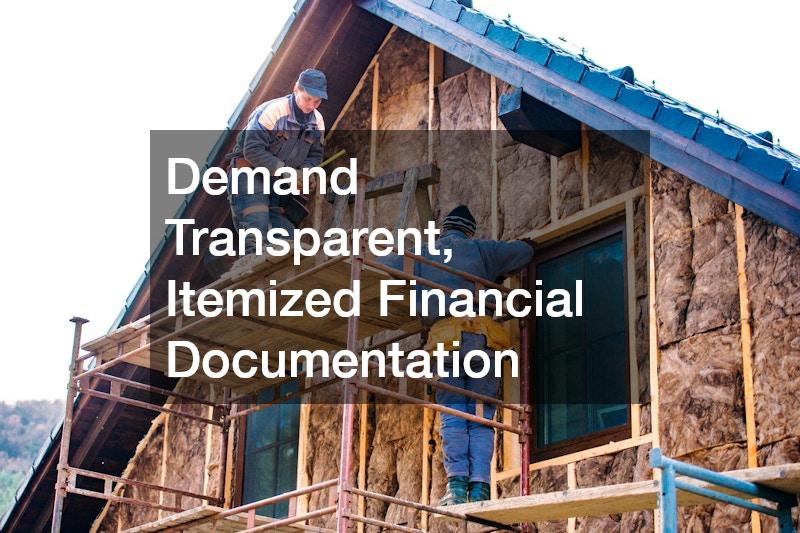
The final frontier of vetting your prospective partner is navigating the complex financial and contractual documentation. The construction industry is infamous for ambiguous billing practices, surprise change orders, and high-pressure sales tactics. Protecting your household budget requires you to demand absolute financial transparency before a single hammer is swung.
Refuse Lump-Sum Quotes
If a salesperson inspects your property and hands you a piece of paper with a single, massive lump-sum dollar amount scrawled at the bottom, politely show them the door. A trustworthy professional will never obscure where your money is going. You must insist on comprehensive, meticulously detailed roof estimates that break down the entire scope of the project line by line.
An acceptable, transparent quote should clearly itemize:
-
The exact cost of tear-off labor and debris disposal (including dumpster rental fees).
-
The specific brand, product line, and color of the primary materials being installed.
-
The linear footage and cost of all necessary underlayment, ice and water shields, and metal flashing.
-
The administrative costs associated with securing municipal building permits.
When you have itemized quotes from three different providers, you can accurately compare them apples-to-apples. If one quote is significantly cheaper than the others, the itemized breakdown will usually reveal exactly what corners they are cutting—such as reusing old, rusted flashing or opting for the lowest-grade, unbranded underlayment.
Clarify Contingency Pricing Before Work Begins
One of the most common points of friction between homeowners and contractors occurs when hidden damage is discovered mid-project. Because it is physically impossible for a contractor to see the condition of the wooden decking until the old materials are completely torn off, you must have a clear financial plan for dealing with hidden rot or water damage.
Do not wait for the crew to uncover a rotting plywood deck to negotiate the cost of fixing it. Advise your contractor to include a clearly defined contingency clause in the initial contract. This clause should state the exact per-sheet cost of replacing damaged plywood and the hourly labor rate for any emergency roof repair service that may be required to fix compromised structural trusses. Having these prices locked in writing prevents the contractor from holding your project hostage and overcharging you when you are in a vulnerable, mid-construction position.
Establish a Fair Payment Schedule
Finally, carefully review the proposed payment terms outlined in the contract. A major red flag is any contractor who demands 100% of the project cost upfront in cash. This leaves you with zero financial leverage if the crew abandons the job or performs substandard work. Conversely, expecting a contractor to front the entire cost of expensive materials is also unreasonable.
You should aim to negotiate a fair, milestone-based payment schedule. A standard, equitable arrangement typically involves a small initial deposit (e.g., 10% to 15%) to secure your spot on the production calendar. A second payment is then made on the day the heavy materials are successfully delivered to your driveway. The final, most substantial payment should be strictly withheld until the project is 100% complete, the final municipal inspections have been passed, and you have personally walked the property with the project manager to verify that the final debris cleanup was executed to your total satisfaction.
Conclusion
Selecting the right professional to handle your home’s exterior renovation is undoubtedly a daunting task, but it is one that you can navigate successfully with the right preparation. The key to mitigating stress and protecting your financial investment lies in shifting your mindset from that of a passive consumer to an active, meticulous project manager. By refusing to accept slick marketing at face value, you take control of the outcome.
The evaluation framework is rigorous but necessary: start by demanding hard proof of insurance, licensing, and elite manufacturer certifications to weed out illegitimate operations. Next, ensure the crew’s specific, daily expertise perfectly aligns with the materials and architectural complexity of your unique home. Take the time to dissect the fine print of both the material and labor warranties, ensuring you are protected against both factory defects and human error. Do not rely solely on star ratings; dig into critical reviews and speak directly with past clients to gauge the company’s true character and post-sale responsiveness. Finally, protect your budget by demanding itemized, line-by-line financial proposals and establishing a fair, milestone-based payment schedule.
While the temptation to simply choose the absolute lowest bidder is strong, remember that drastically low prices are almost always subsidized by compromised safety standards, cut corners, and inferior materials. Your home is likely your most valuable financial asset, and its protection is not the place to hunt for bargain-basement deals. Trust your instincts during the interview process—if a representative is evasive, pushy, or dismissive of your questions, move on to the next candidate. Use the detailed criteria outlined in this guide to confidently interview local professionals, secure an airtight contract, and achieve a successful, stress-free renovation that will protect your family for decades.