
Your home is your sanctuary, your primary financial investment, and your shelter against the unpredictable forces of nature. At the very top of this crucial structure sits your roof—the first line of defense shielding everything and everyone you hold dear from rain, wind, snow, and the blistering sun. When this vital barrier begins to fail, the implications ripple throughout the entire house. Compromised shingles can lead to devastating water leaks, damaged insulation, toxic mold growth, and eventually, severe structural rot that can cost tens of thousands of dollars to rectify. Because the stakes are incredibly high, choosing the right professionals to handle your home’s exterior cannot be taken lightly.
Unfortunately, the home improvement industry is vast and highly fragmented, flooded with thousands of options ranging from master craftsmen to unscrupulous opportunists. This is especially true in the chaotic aftermath of severe weather events, where neighborhoods are often swarmed by canvassers promising quick fixes at impossibly low prices. For the average homeowner, navigating this landscape is daunting. It is easy to feel overwhelmed, confused by technical jargon, and anxious about making a costly mistake.
The good news is that finding a trustworthy expert is entirely within your control if you approach the process methodically. You do not need to be a construction expert to make an informed, confident decision. By following a systematic, step-by-step approach—starting with assessing your own needs, rigorously vetting credentials, and ending with a thorough analysis of warranties and contracts—you can cut through the noise. This comprehensive guide is designed to empower you with the exact knowledge, strategies, and insider tips you need to hire a professional who delivers uncompromising quality, transparency, and long-term peace of mind.
Diagnose Your Project Scope Before You Make a Call

Before you even think about picking up the phone or typing a search query into your computer, you must first become acquainted with the current state of your property. Understanding exactly what you need prevents you from being easily upsold on unnecessary interventions. Knowledge is power, and taking the time to assess your situation puts you in the driver’s seat of the upcoming negotiations.
Spotting the Early Warning Signs of Damage
You do not need to climb a ladder to get a basic understanding of your home’s exterior health. In fact, staying on the ground is the safest and most recommended approach for homeowners. Grab a pair of binoculars and slowly walk the perimeter of your property. You are looking for a few specific visual cues that indicate degradation.
-
Curling, cracked, or missing shingles: As asphalt ages, it loses its flexibility and ability to lay flat against the decking.
-
Granule loss: Look closely at your gutters and downspouts. If you see a heavy accumulation of what looks like coarse black sand, your shingles are rapidly losing their protective outer layer.
-
Sagging sections: A visual dip in the plane of the structure suggests structural issues, perhaps rot in the decking or compromised trusses.
-
Interior water stains: Go up to your attic during the day. Look for beams of light coming through the boards, or inspect the ceilings in your upper-level rooms for brown, circular water stains.
Differentiating Between Routine Maintenance and Major Overhauls
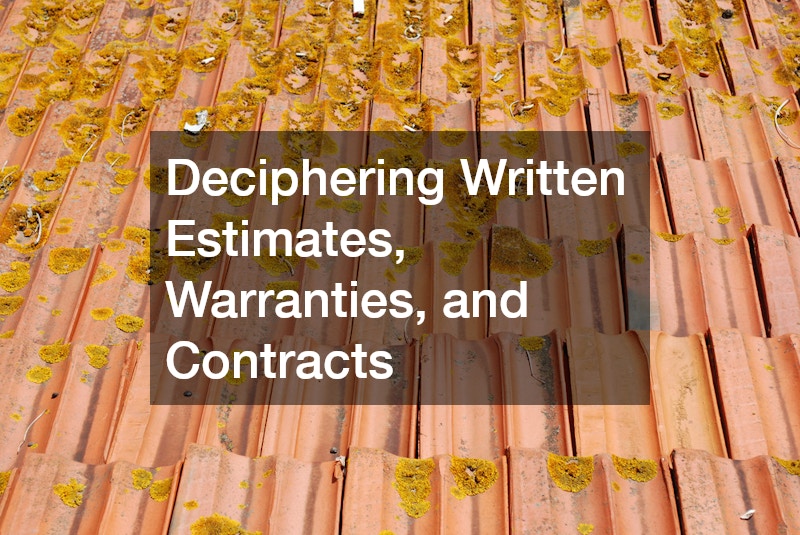
It is vital to properly categorize the severity of your situation. Sometimes, homeowners panic when they see dark streaks or green moss growing on their shingles, assuming the worst. Often, this is merely an accumulation of blue-green algae (Gloeocapsa magma) or moss, which can be safely eradicated by a professional roof cleaning service using soft-wash techniques. This restores the aesthetic appeal without tearing anything off.
On the other hand, if a recent storm blew off a handful of shingles, or a fallen branch caused a localized puncture, you likely just need targeted roof repairs to replace the damaged section and restore the watertight seal. However, if the materials are over twenty years old, curling extensively, or failing in multiple areas simultaneously, patching will only delay the inevitable. Knowing which of these three scenarios you fall into ensures you ask the right questions when you start making calls.
Documenting the Current State of Your Home’s Exterior
Creating a paper trail is essential, particularly if you anticipate filing an insurance claim due to storm damage. Start a dedicated folder (physical or digital) for this project.
-
Take clear, well-lit photos from multiple angles around your house.
-
Document the exact dates of recent severe weather events (hail, high winds).
-
Keep a log of any immediate interior damage you notice, such as bubbling paint on the ceiling.
-
Write down the approximate age of your current materials, if you have that information from when you purchased the house.
Having this documentation ready shows prospective contractors that you are organized, serious, and engaged in the process.
Where and How to Build a Shortlist of Reliable Candidates

With a clear understanding of your needs, the next step is to cast a net and bring in a select group of professionals to evaluate. The goal here is not to find just one person, but to build a robust shortlist of three to five highly qualified candidates. Relying on just one bid is one of the most common and costly mistakes a homeowner can make.
Mining Your Personal Network for Unbiased Recommendations
The most reliable source of information is usually the people closest to you. Unlike online platforms that can be manipulated, your personal network will give you the unvarnished truth about their experiences.
-
Ask neighbors: If you live in a subdivision where the houses were built around the same time, chances are your neighbors are also dealing with similar maintenance issues. Pay attention to who is working on their homes and ask them directly about their experience.
-
Consult friends and family: Put out a request on your personal social media or group chats. Ask specific questions: “Did they show up on time?” “Did they clean up the nails in the yard?” “Did the final invoice match the initial estimate?”
-
Talk to local real estate agents: Realtors are incredibly well-connected. They frequently need to have houses fixed up quickly and properly before a sale, so they usually have a meticulously curated list of reliable professionals.
The Strategic Advantage of Hiring Within Your Community
When severe weather strikes, it is common to see a massive influx of out-of-state crews knocking on doors. While some may do decent work, there is a massive strategic advantage to hiring established local roofing contractors. A business that is deeply rooted in your specific geographic area has a physical address, a reputation to uphold, and a deep understanding of the local climate challenges and municipal building codes. If you hire an out-of-town crew, they will likely be hundreds of miles away by the time a leak develops six months later, leaving you with a voided warranty and no recourse. Furthermore, established roofing companies in your city rely heavily on word-of-mouth and community goodwill, meaning they are far more incentivized to ensure you are completely satisfied with the final result.
Navigating Online Reviews and Filtering Out Fake Testimonials
Once you have a few names from your network, it is time to vet them digitally. However, you must read online reviews with a critical eye.
-
Check the Better Business Bureau (BBB): Look for businesses with an A or A+ rating. More importantly, look at how the business responds to the complaints that do exist. A professional, measured response to a disgruntled customer is a great sign of strong customer service.
-
Analyze the texture of the reviews: Discard the generic five-star reviews that just say “Great job!” and the one-star reviews that are purely emotional rants. Focus on the three- and four-star reviews, or the five-star reviews that tell a detailed story.
-
Look for consistency: Does the business have a steady stream of good reviews over five to ten years, or did they suddenly get fifty five-star reviews in the span of one week? The latter is a massive red flag indicating purchased or fake testimonials.
The Non-Negotiables: Verifying Licenses, Insurance, and Safety Records

Once you have narrowed down your list to a few strong contenders, it is time to play detective. This section covers the absolute non-negotiables. Under no circumstances should you hire anyone who fails to meet the criteria in this section, regardless of how friendly they are or how cheap their bid is. Skipping this step opens you up to catastrophic financial liability.
Confirming State and Municipal Licensing Requirements
The first thing you must do is ensure the business is legally allowed to operate in your jurisdiction. Licensing requirements vary wildly from state to state, and even from county to county.
-
Identify your local laws: Do a quick web search to see what your specific state requires. Some states require rigorous testing and years of apprenticeship, while others simply require a basic registration fee.
-
Ask for the license number: A reputable professional will have their license number printed on their business cards, their website, and their trucks.
-
Verify with the state board: Do not just take their word for it. Go to your state’s Department of Labor or licensing board website and look up the number. Ensure the license is active, in good standing, and belongs to the exact business name you are dealing with.
Why Worker’s Compensation and General Liability Protect You
Construction is a dangerous industry. Accidents happen, even to the most seasoned veterans. If a worker falls off a ladder on your property, or if a heavy bundle of shingles is dropped through your ceiling, you need to know who is footing the bill. A legitimate residential roofing company must carry two specific types of insurance:
-
General Liability Insurance: This protects your property. If they accidentally back their dump truck into your garage door, or if they fail to tarp the structure properly and a rainstorm destroys your hardwood floors, this policy covers the damages.
-
Worker’s Compensation Insurance: This protects the workers—and you. If an employee is injured on your property, this policy pays for their medical bills and lost wages. If the company does not carry this, the injured worker can sue you, the homeowner, directly for their medical expenses, which can easily bankrupt a family. Many fly-by-night local roofers operate without this coverage to keep their bids artificially low. Do not fall into this trap.
Requesting Proof of Insurance Directly from the Provider
Unfortunately, insurance fraud is not uncommon in the home improvement sector. Some unscrupulous individuals will pay the first month’s premium to get a piece of paper, and then immediately cancel the policy, leaving them uninsured but carrying a certificate that looks valid.
To protect yourself, when you ask for proof of insurance, do not accept a photocopy handed to you by the salesperson. Instead, ask them for the name and phone number of their insurance agent. Call the agent directly and request that the certificate of insurance (COI) be emailed or mailed straight to you, with you listed as the certificate holder. A legitimate business will have absolutely no problem with this request; it is standard operating procedure.
Gauging Expertise and Evaluating Past Portfolios

By now, your shortlist consists only of legally compliant, fully insured candidates. The next phase is the interview and evaluation process. This is where you determine not just if they can do the job legally, but if they have the specific expertise and craftsmanship to do it perfectly.
Essential Questions to Ask During the Initial Consultation
When the estimator comes to your home, remember that you are interviewing them, not the other way around. Prepare a list of questions to gauge their professionalism and operational procedures.
-
“Will you provide a dedicated project manager?” You need one point of contact who will be on-site, ensuring the crew is following the plan and available to answer your questions as the day progresses.
-
“Do you use subcontractors, or are your crews in-house?” Subcontractors are not inherently bad, but it adds a layer of complexity. If they use subcontractors, you must verify that those specific crews are also covered under the general liability and worker’s comp policies.
-
“What is your protocol for inclement weather?” Ask exactly what they do if a sudden thunderstorm rolls in while the decking is exposed. They should have a clear, immediate tarping protocol to protect your home.
Checking Manufacturer Certifications for Premium Material Handling
The quality of the materials is only as good as the craftsmanship of the person nailing them down. Major manufacturers (such as GAF, Owens Corning, and CertainTeed) offer rigorous certification programs for contractors.
A high-quality residential roofer will usually carry advanced designations (like “Master Elite” or “Platinum Preferred”) from these manufacturers. Earning these badges is not easy; it requires the company to prove financial stability, carry proper insurance, and undergo continuous factory training on the latest installation techniques. More importantly, using a certified contractor is often the only way you can access the manufacturer’s top-tier, extended warranties, which cover both materials and labor for decades. If you are investing in a premium roofing installation, you must ensure the crew is explicitly certified by the brand of materials you have chosen.
Inspecting Portfolios for Consistency and Quality Craftsmanship
Never hire someone based purely on a charismatic sales pitch. You need visual proof of their capabilities.
-
Ask for a portfolio of recent work: Look closely at the details in the photos. Are the lines straight? Is the flashing around chimneys and vents neat and uniform?
-
Request addresses of older projects: Ask the contractor for a list of three to five homes they completed in your area between three and five years ago. Drive by those homes. A brand-new project always looks great, but seeing how the materials and workmanship are holding up after a few years of harsh weather will tell you everything you need to know about their true quality. If the shingles are already looking wavy or the flashing looks rusty on a five-year-old job, cross that candidate off your list.
Deciphering Written Estimates, Warranties, and Contracts
You have narrowed it down to the final contenders. Now you are staring at multiple written bids. This final step is arguably the most critical. The paperwork is what binds the agreement, and failing to understand the fine print can turn a dream project into a legal nightmare.
How to Compare Apples-to-Apples on Detailed Quotes
A common mistake is looking only at the final dollar amount at the bottom of the page. A bid of $10,000 is not necessarily better than a bid of $12,000 if the cheaper bid is cutting corners. You must demand an itemized estimate from every roof installer you are considering so you can compare them fairly.
A professional, detailed quote should break down the following elements:
-
Tear-off and disposal: Does the quote include the labor to remove the old materials, the cost of renting the dumpster, and the landfill fees?
-
Underlayment and ice/water shield: What specific type of synthetic underlayment are they using? Are they applying ice and water shields in the valleys and along the eaves as required by code?
-
Ventilation: A properly functioning system requires intake (soffit) and exhaust (ridge) ventilation. Does the quote include upgrading or replacing the current ventilation system?
-
Flashing: Are they reusing old metal flashing around your chimney and skylights, or are they fabricating brand-new, custom flashing? (Reusing old flashing is a massive red flag).
-
Cleanup: Is daily cleanup included? Do they explicitly state they will use magnetic sweepers to clear your lawn and driveway of hazardous nails?
By demanding line-item details regarding the roofing services being offered, you can clearly see why one bid might be higher than another, allowing you to make an educated choice based on value, not just price.
Understanding the Difference Between Workmanship and Material Warranties
Warranties are often a source of immense confusion. You must understand that there are two entirely separate warranties at play in your project.
-
The Material Warranty: This is provided by the manufacturer of the shingles (e.g., GAF, Owens Corning). It guarantees that the shingles themselves will not prematurely degrade or fail due to factory defects. This warranty does not cover errors made during the application process.
-
The Workmanship Warranty: This is provided by the contractor. It guarantees the labor and the installation itself. If a leak occurs because a nail was driven too high or the flashing was improperly sealed, this is the warranty that covers the fix.
Pay close attention to the length and terms of the workmanship warranty. A standard industry guarantee is between two to five years, while premium companies might offer ten years or more. Ensure both warranties are provided to you in writing before you agree to move forward.
Red Flags to Watch for Before You Sign on the Dotted Line
Before you pick up the pen, take a deep breath and review the contract one last time. Be on high alert for these common industry red flags:
-
Massive upfront deposits: It is standard to pay a deposit to schedule the job and order materials, usually around 20% to 30%. However, if a contractor demands 50% or more upfront, or asks you to pay entirely in cash before materials are even delivered, walk away immediately.
-
Contingency contracts: In storm damage situations, canvassers might ask you to sign a document “just to allow them to inspect the property” or “just to speak with your insurance company.” Read carefully. These are often contingency contracts that legally bind you to use their company if your insurance claim is approved, trapping you before you have even seen an estimate.
-
High-pressure sales tactics: If an estimator tells you that a special discount is “only valid if you sign right this second,” ask them to leave. A reputable professional will give you a written estimate that is valid for a reasonable timeframe (usually 14 to 30 days) and will encourage you to take the time to review it.
-
Vague timelines: The contract should have an estimated start date and an estimated completion date. While weather can cause inevitable delays, the contract should clearly outline how scheduling changes will be communicated to you.
Conclusion
Embarking on a major home improvement project can feel incredibly intimidating, but it does not have to be a blind leap of faith. By taking control of the process from the very beginning, you protect your financial investment and ensure the safety of your family. It all comes down to doing your homework: carefully diagnosing the reality of your situation, leaning on your local network to build a trusted shortlist, and ruthlessly verifying every license and insurance policy.
Furthermore, by taking the time to interview contractors, inspect their previous work, and demand itemized, transparent contracts, you strip away the uncertainty that plagues so many homeowners. You transition from hoping for the best to expecting excellence.
Your home deserves the highest level of care, and you deserve a stress-free experience. Start today by grabbing a pair of binoculars and taking a walk around your property, or by sending a quick message to a neighbor whose exterior you admire. The effort you put into vetting your experts now will pay massive dividends the next time a severe storm rolls through, allowing you to rest easy under a secure, masterfully crafted roof.