Pre-owned cars for sale can be an excellent way to get a reliable vehicle at a fraction of the cost of a new one. Used cars offer financial savings, lower depreciation, and often a wider variety of models within a set budget. However, purchasing a used car requires careful attention to detail. Without thorough inspections, buyers may encounter hidden problems that can result in costly repairs or compromise safety.
To make an informed decision, it is essential to evaluate the vehicle’s mechanical systems, especially those related to brakes, driveshafts, tires, and other critical components. This guide provides a comprehensive checklist for prospective buyers to follow before finalizing a purchase. Whether buying from a car dealer or a private seller, taking the time to conduct inspections and research the vehicle’s history can prevent future headaches. From sedans and SUVs to trucks and compact cars, these guidelines are applicable across all vehicle types.
Why Pre-Purchase Inspections Are Critical
Purchasing used cars without a thorough inspection is risky. Many issues are not visible to the untrained eye but can significantly affect safety and reliability. Hidden problems in braking systems, drivetrain components, or suspension can lead to expensive repairs, accidents, or both. A detailed pre-purchase evaluation allows buyers to identify these concerns in advance.
The lifespan of a car often exceeds ten years, but not every vehicle ages the same way. Factors like driving habits, climate, and previous maintenance play a role in wear and tear. For instance, a vehicle driven primarily in “stop-and-go” city traffic will have significantly more wear on its braking system and transmission than one driven mainly on highways. Similarly, cars from northern climates may suffer from undercarriage rust due to road salt, which can compromise the structural integrity of the driveshaft and brake lines.
Understanding the condition of critical systems ensures buyers are aware of potential future costs and avoid unexpected repairs shortly after purchase. Even vehicles sold through reputable dealerships benefit from an independent inspection. An experienced mechanic can detect issues—such as a hairline crack in a CV boot or a slow leak in a steering rack—that may not be apparent during a brief visual check or a short test drive. These inspections provide peace of mind and negotiating leverage, allowing buyers to feel confident in their decision.
Inspecting the Exterior and Body
Visual Walkaround
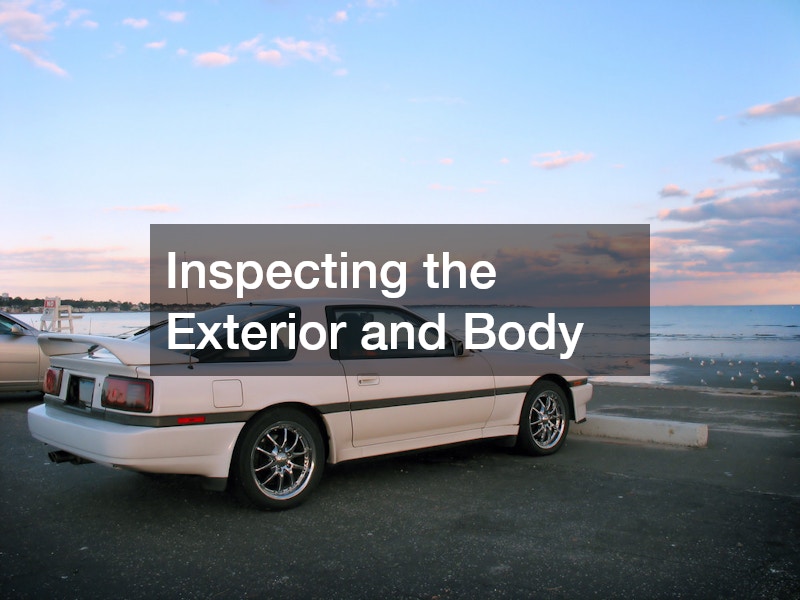
Before opening the hood or taking a test drive, examine the car’s exterior thoroughly. Stand several feet back and look down the side of the panels. Look for dents, scratches, rust spots, uneven paint, or panel gaps. Misaligned body panels or doors that don’t close with a clean “thud” often indicate prior accidents or subpar repairs. Cosmetic imperfections can be clues to deeper structural issues, such as a bent frame that could affect the vehicle’s alignment for life.
Check the wheel wells and rocker panels for “bubbling” paint, which is a classic sign of hidden rust. Documentation from a certified auto body shop confirming completed repairs is highly valuable. These records assure buyers that any prior damage was corrected professionally and does not compromise safety or vehicle performance.
Glass, Windows, and Trim
Check all windows and the windshield for cracks, chips, or previous repairs. In many modern vehicles, the windshield is a structural component that supports the roof during a rollover; a crack isn’t just a visual nuisance—it’s a safety hazard. Any auto glass repair work should be properly documented and evaluated to ensure it was done correctly. Poorly repaired glass can lead to leaks, reduced visibility, or further cracking over time.
Evaluating Brakes
How Brakes Function
Brakes are one of the most important safety systems in any vehicle. Most modern cars use a disc brake system, where a hydraulic caliper presses brake pads against a spinning rotor. This process converts kinetic energy into heat through friction, slowing the car. Over time, brake pads, rotors, calipers, and hydraulic lines wear down.
During your inspection, try to peek through the wheel spokes. You should see the brake pad sandwiched against the rotor. If the friction material is less than 1/8th of an inch thick, the pads need immediate replacement. Uneven wear between the left and right sides may indicate a sticking caliper, alignment issues, or aggressive driving.
Signs of Brake Wear and Mechanical Health
A professional brake repair inspection includes checking pad thickness, rotor condition, fluid levels, and brake line integrity. Look for “scoring” or deep grooves on the rotors; if the surface isn’t smooth, the rotors may need to be resurfaced or replaced. Check the brake fluid reservoir under the hood. If the fluid is dark brown or black (rather than a light amber), it has absorbed moisture and needs to be flushed to prevent internal corrosion of the ABS module.
During a test drive, listen for:
- Squealing: Usually a wear indicator hitting the rotor.
- Grinding: Metal-on-metal contact, meaning the pads are completely gone.
- Pulsing: Often a sign of “warped” rotors.
- Pulling: If the car veers to one side when braking, it could be a collapsed brake hose or a seized caliper.
Addressing these issues before purchase ensures safety and reduces immediate repair costs. If the seller claims the brakes were “just done,” ask for the itemized receipt to see if the rotors were replaced or merely “turned.”
Understanding the Driveshaft and CV Axles
The driveshaft (or propeller shaft in RWD/AWD vehicles) and CV axles (in FWD vehicles) transfer power from the engine and transmission to the wheels. These components are under immense torque and stress. Wear or damage here can cause vibrations, unusual noises, and even total loss of power to the wheels.
Professional driveshaft repair services examine universal joints (U-joints), carrier bearings, and splines. In front-wheel-drive cars, the focus is on the Constant Velocity (CV) boots. If these rubber boots are torn, grease leaks out, and dirt gets in, it quickly destroys the joint. Look for dark, thick grease splattered on the inside of the front wheels or the underside of the engine bay.
Warning Signs of Drivetrain Problems
Common symptoms of a failing driveshaft or drivetrain include:
- Vibrations: Shuddering that increases with vehicle speed often points to an unbalanced driveshaft or worn U-joints.
- Clunking: A loud “clunk” when shifting from Park to Drive or Reverse is a classic sign of excessive play in the drivetrain.
- Clicking: A rhythmic clicking sound while making sharp turns usually indicates a failing CV joint.
- Rattling: High-pitched rattling during acceleration can signal a failing carrier bearing.
Buyers should request records of any previous driveshaft repair services to verify that the drivetrain has been maintained, especially for trucks and SUVs used for towing. Addressing driveshaft issues promptly is essential for both safety and vehicle longevity, as a snapped driveshaft can cause catastrophic damage to the transmission and undercarriage.
Tires and Suspension
Importance of Tires
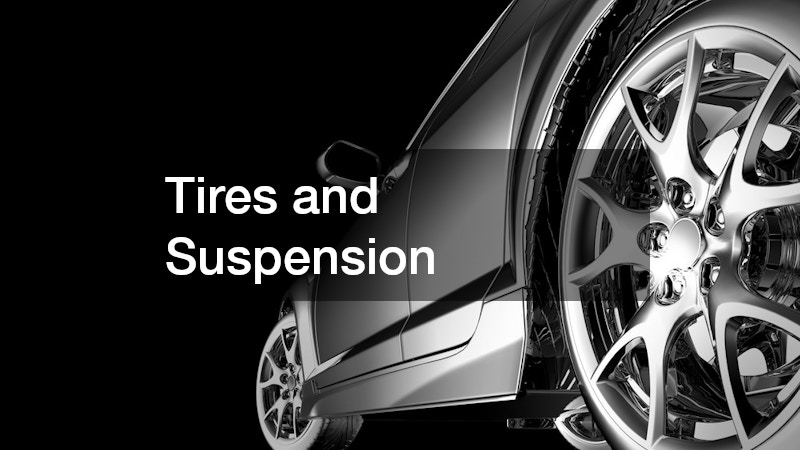
Tires are the only contact point between a car and the road. Visiting a trusted tire shop allows buyers to evaluate four main factors:
- Tread Depth: Use the “penny test” or a depth gauge. Tires with less than 4/32″ of tread will soon need replacement.
- Wear Patterns: If the inside of the tire is worn more than the outside, the car has an alignment issue or worn suspension bushings.
- Sidewall Condition: Look for “dry rot” (tiny cracks) or bulges. Bulges indicate a structural failure in the tire’s internal carcass and are “ticking time bombs” for blowouts.
- Age: Check the DOT code on the sidewall. Tires older than six years should generally be replaced regardless of tread depth, as the rubber compounds harden and lose grip.
Suspension Check
Suspension components—shocks, struts, control arms, and bushings—affect ride comfort and vehicle stability. Test the car by gently bouncing each corner; the car should move up and down once and then settle. If it continues to bounce or “float,” the shocks or struts are worn out.
During the test drive, hit a few bumps. If you hear a “clunk” or “knock,” it likely points to worn-out sway bar links or ball joints. A properly functioning suspension ensures smoother handling and prevents accelerated tire wear. Ignoring these red flags can lead to a car that feels “loose” or “darty” at highway speeds, creating a stressful driving experience.
Interior and Electronics
Cabin Functionality and Wear
While mechanical systems take priority, assessing the interior provides a window into how the previous owner cared for the car. Excessively worn driver’s seat bolsters or a shiny, smooth steering wheel on a low-mileage car might suggest the odometer has been tampered with or the car was used for heavy delivery work.
Check that seats adjust properly (especially power seats), and verify that all seatbelts retract and lock correctly. Check the carpets for dampness or a musty smell, which could indicate a leaking sunroof or, worse, previous flood damage.
Technology and Key Systems
In the modern era, electronics are just as critical as the engine.
- HVAC: Ensure the air conditioning blows cold and the heater blows hot within a few minutes. Check all vent positions (defrost, floor, etc.).
- Infotainment: Test the Bluetooth, navigation, and backup camera. Modern head units are expensive to replace.
- Dashboard: When you turn the key to the “On” position, every warning light (Check Engine, Airbag, ABS) should illuminate. If a light doesn’t come on at start-up, a dishonest seller may have pulled the bulb or taped over the LED to hide a fault.
- Key Systems: Ensure the car key replacement system works correctly. Keyless entry and transponder keys can malfunction and require specialized programming. Confirm all keys are present and operational. Replacing a modern “smart key” or fob can cost between $200 and $600.
Documentation and Vehicle History

Title and Records Review
Examine the vehicle title to confirm it is “clear.” Avoid “orange” or “blue” titles that indicate “Salvage,” “Rebuilt,” or “Lemon Law Buyback” unless you are an expert who understands the risks. A salvage title indicates prior significant damage, which can make the car difficult to insure and significantly reduce resale value.
Service History
A comprehensive history report (like Carfax or AutoCheck) details previous ownership, accidents, and service records. However, these reports aren’t perfect; they only show what was reported. Cross-reference the report with physical service receipts. A car with a thick folder of oil change receipts and “preventative” maintenance (like timing belt replacements) is almost always a better bet than a “clean” car with no service history.
Test Driving
Observing Performance
A test drive is your best opportunity to evaluate the vehicle in the real world. Drive on a variety of roads: city streets with potholes, smooth highways, and hilly terrain.
- Engine: Should idle smoothly and accelerate without “stumbling.”
- Transmission: Upshifts should be crisp, not “slushy.” Downshifts should be smooth without a “jolt.”
- Steering: On a flat road, the car should travel straight. If you have to hold the wheel at an angle to go straight, the alignment is off.
Evaluating Comfort and Ergonomics
Assess comfort, visibility, and overall driving experience. Can you see out of the rear window? Are the mirrors positioned well? Different vehicle types have unique driving characteristics—a body-on-frame truck will feel much more “truck-like” and stiffer than a unibody crossover. Note any concerns and discuss them with a professional inspector later.
Professional Pre-Purchase Inspection (PPI)

Even if the vehicle appears perfect, a licensed mechanic’s inspection provides peace of mind. Most shops offer a “Pre-Purchase Inspection” (PPI) for a flat fee (usually $150–$300). This is the best money you will ever spend. Professionals can put the car on a lift to identify:
- Fluid leaks (oil, coolant, transmission fluid).
- Frame damage hidden by plastic under-trays.
- Worn bushings that are impossible to see from the ground.
- Error codes stored in the car’s computer that haven’t triggered a warning light yet.
Negotiation and Closing the Deal
Using Inspection Results
Leverage the inspection report to request repairs or price adjustments. Common negotiation points include:
- New tires or a discount equivalent to their cost.
- Auto glass repair for chips in the windshield.
- Brake maintenance or driveshaft servicing.
Be reasonable; if the car is already priced below market value, the seller may be less willing to budge. However, safety items (brakes and tires) are usually non-negotiable requirements for a roadworthy vehicle.
Making a Smart and Safe Choice
Buying a used car requires diligence, attention to detail, and informed decision-making. By focusing on the “Big Three”—brakes, driveshafts, and tires—you address the primary components responsible for keeping the car moving safely and reliably. While the process of checking documentation and paying for professional inspections might seem tedious, it is a small price to pay to avoid a “lemon.”
Following this ultimate checklist allows you to confidently select a vehicle that fits your lifestyle and budget. Whether you’re looking at a rugged truck for work or a fuel-efficient sedan for commuting, the principles of mechanical integrity remain the same. By investing the time and effort upfront, you can enjoy the benefits of your pre-owned vehicle with minimal risk and maximum satisfaction.